
How a Law Enforcement Virtual Reality Training System Can Support De-Escalation Training
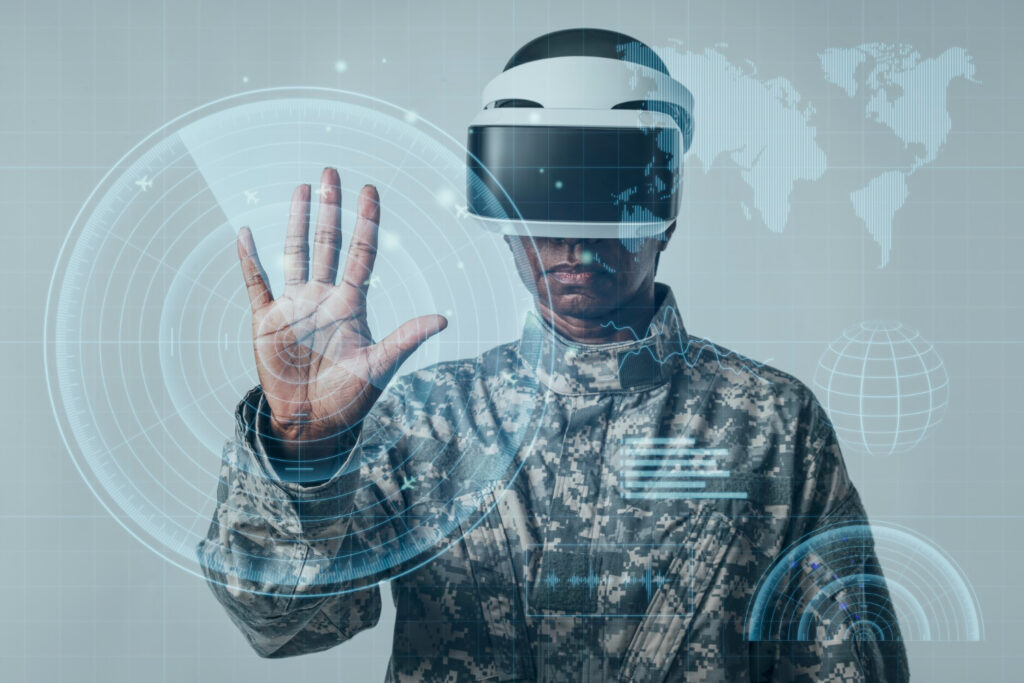
De-escalation is one of the most difficult policing skills to teach well because success depends on far more than knowing the right words. Officers have to read behaviour, manage their own stress, understand what is changing in front of them and communicate in a way that fits the moment rather than relying on a fixed script. A law enforcement virtual reality training system can create a controlled environment where these skills are practised repeatedly, allowing officers to experience how tone, timing, distance and decision-making can influence the direction of an encounter. The benefit is not simply that the scenario feels realistic, but that the officer has an opportunity to make choices, observe the consequences and then review those choices in detail.
That makes virtual reality particularly useful for training around situations where the correct response may not be obvious from the outset. A person may appear angry but actually be frightened, confused or experiencing a mental health crisis. Someone who initially refuses to cooperate may become calmer when instructions are simplified or when the officer allows more time for a response. The opposite can also happen, with an apparently routine encounter changing rapidly. Training needs to help officers recognise these differences rather than treating every difficult interaction as though it follows the same pattern.
One of the biggest advantages of simulation is that it gives officers somewhere to practise communication under pressure. Classroom discussions can explain why de-escalation matters, but it is much harder to recreate the emotional intensity of a tense encounter using theory alone. When a trainee is placed in an immersive scenario with raised voices, movement, conflicting information and uncertain intent, communication becomes something they have to actively manage. The officer has to decide whether to speak, wait, ask questions, give instructions or change position, often while processing several pieces of information at once.
This is where habits become visible. An officer may believe they communicate calmly but discover that they speak much faster when stress rises. Another may issue several commands in quick succession, making it difficult for the other person to understand what is expected. Someone else may interrupt repeatedly without realising it. These behaviours can be difficult to identify through ordinary classroom teaching because they only appear when the officer is placed under pressure.
Virtual scenarios allow those habits to be examined without the consequences of a real-world mistake. An officer can complete an exercise, review what happened and then attempt a similar scenario using a different approach. If fewer commands, a lower tone or a slower pace produces a better interaction, the trainee experiences that difference directly rather than simply being told what they should have done.
The ability to repeat scenarios is especially important because de-escalation is not a single technique. What works in one situation may be ineffective in another. A distressed person may respond well to reassurance, while someone who is highly agitated may need clearer boundaries and more physical space. An individual experiencing confusion may require simple language and additional time to process instructions. Good training therefore needs variation rather than teaching one preferred response.
Virtual reality can provide that variation while keeping the underlying learning objectives consistent. The setting may stay similar while the behaviour of the person changes. In another exercise, the environment might change while the behavioural cues remain familiar. This prevents officers from memorising the sequence and encourages them to assess what is actually happening.
That distinction is important because de-escalation can fail when it becomes mechanical. Repeating memorised phrases without paying attention to how the other person is responding is not meaningful communication. Officers need to recognise whether their approach is helping, having no effect or actively increasing tension.
A virtual scenario can be designed to respond to those decisions. If the trainee adopts an unnecessarily confrontational tone, the person in the simulation may become more agitated. If the officer creates space, listens and communicates more clearly, the situation may develop differently. The purpose is not to imply that every real encounter can be resolved through communication, because that would be unrealistic. It is to demonstrate that officer behaviour is one of several factors that can influence how an interaction develops.
Body language is another important element. De-escalation is not only verbal. Positioning, distance, posture and movement can all affect how an encounter feels to the people involved. An officer may use calm language while simultaneously standing too close or moving in a way that appears threatening. That mismatch can undermine the intended message.
Virtual training can help officers become more aware of these details. The trainee may be required to maintain an appropriate distance, avoid unnecessary movement or choose a position that provides both safety and space. Instructors can then discuss how physical positioning affected the scenario alongside the verbal choices that were made.
This can be particularly valuable when dealing with people who are frightened, distressed or experiencing altered perceptions. Someone may interpret rapid movement differently from how an officer intends it. Training that encourages officers to think about how their actions may be perceived can add another layer to de-escalation practice.
Situational awareness also plays a major role. Focusing too heavily on communication with one individual can cause an officer to overlook what is happening elsewhere. A bystander may move closer, another person may enter the scene or something in the environment may suddenly change the level of risk.
A strong virtual exercise can introduce these competing demands so that officers have to balance de-escalation with awareness. This reinforces the idea that communication does not replace officer safety. The two need to operate together.
The officer may need to continue speaking calmly while repositioning or monitoring someone nearby. They may decide that additional resources are required. In some situations, the safest way to reduce tension may be to slow the encounter down rather than immediately moving closer.
Virtual reality can make those judgements part of the exercise instead of teaching communication as an isolated skill.
Another useful feature is the ability to expose officers to behavioural cues associated with a wide range of situations. Someone in crisis may behave differently from a person who is deliberately threatening. A person with hearing difficulties, cognitive impairment or severe anxiety may fail to respond to instructions for reasons that have nothing to do with defiance.
Repeated scenario exposure can encourage officers to consider multiple explanations rather than relying immediately on one interpretation. That does not mean assuming that every unusual behaviour is harmless. It means remaining open to new information long enough to make a better assessment.
This is particularly valuable in ambiguous situations. Real calls often begin with incomplete information, and the first description provided to an officer may turn out to be inaccurate. A virtual scenario can deliberately introduce this uncertainty by giving the trainee an initial report that only partially matches what they encounter.
The officer must then update their judgement based on what they actually observe. This helps reinforce the habit of reassessment, which is central to both de-escalation and good decision-making more broadly.
One of the strongest parts of this kind of training comes after the headset is removed. The debrief gives the officer and instructor an opportunity to examine what happened without the urgency of the scenario itself. The trainee can explain what they noticed, what they believed the person was doing and why they chose a particular response.
The instructor can then explore alternative interpretations. Perhaps the officer viewed silence as deliberate non-compliance when there were other possible explanations. Perhaps a change in body language was noticed but not acted upon. Perhaps the trainee became so focused on issuing instructions that they stopped gathering information.
The value of this discussion is that feedback becomes precise. Instead of simply saying that the officer should have communicated better, the instructor can identify a particular point where the interaction changed and examine the choice made at that moment.
When recording or performance data is available, it can make this review even more useful. Officers may not remember exactly what they said or how quickly they responded during a stressful exercise. Reviewing the sequence can highlight differences between what they thought happened and what actually occurred.
That self-awareness is important because people are not always good judges of their own behaviour under pressure. A person may genuinely believe they allowed plenty of time for compliance when only a few seconds passed. Seeing the interaction again can make the lesson much more concrete.
Consistency is another advantage. Live role-play can be highly effective, but it is difficult to guarantee that every trainee experiences exactly the same behaviour. Actors may respond differently, instructors may vary the scenario and environmental conditions can change. Virtual systems allow agencies to present the same core encounter repeatedly, which can make assessment more comparable.
This does not mean every officer should receive an identical scenario indefinitely. Standardisation is useful for evaluation, but variation is essential for learning. A training programme might first use the same exercise to assess a group and then introduce modified versions that require different communication strategies.
That combination of consistency and variation can help agencies distinguish between memorised responses and genuine decision-making. If an officer performs well only when they know exactly what will happen next, the skill may not transfer effectively into real incidents.
Virtual training can also be adapted to experience level. A recruit may begin with scenarios that emphasise clear communication and basic behavioural recognition. A more experienced officer may encounter situations with conflicting information, multiple people or rapidly changing circumstances. Supervisors can face different challenges again, such as coordinating resources while considering how an incident is developing.
This flexibility allows de-escalation to remain part of training throughout an officer’s career rather than being treated as a subject covered once and then assumed to be mastered.
It is equally important to recognise what VR cannot do. It cannot recreate every physical, emotional or environmental detail of a real encounter, and it should not replace live scenario training or experienced instructors. Physical positioning, team coordination and other practical skills still need to be rehearsed in real spaces.
The strongest approach is therefore complementary. Classroom instruction can establish legal and procedural foundations. Virtual reality can provide repeated decision-making and communication practice. Live scenarios can then test those skills in physical environments with other officers and role-players.
What VR adds is the ability to repeat difficult encounters more easily and review them closely. Officers can make a poor decision, understand why it happened and practise again while the lesson is still fresh.
For de-escalation training, that repeated cycle can be particularly valuable because communication improves through use rather than memorisation. Officers need opportunities to hear how they sound under pressure, recognise how quickly they react and become more comfortable allowing an encounter to develop when immediate action is not required.
Ultimately, good de-escalation training is not about teaching officers to avoid action regardless of circumstances. It is about helping them recognise when communication, distance, patience or a different approach may reduce the need for escalation while remaining prepared to respond when the situation genuinely requires it.
Virtual reality provides a controlled place to practise making that distinction. The technology itself is not the lesson; the decisions made inside the scenario are. When those decisions are followed by careful review and another opportunity to practise, simulation can help turn de-escalation from a concept discussed in training into a skill officers are better prepared to use when circumstances become difficult.

